

Classification of Bolts
Classification of Bolts1. By Head Shape1.1. Hex Head Bolt: Most widely used. Tightened by spanner or socket, for machinery, s
Classification of Bolts
1. By Head Shape
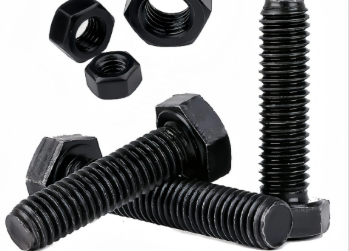
1.1. Hex Head Bolt: Most widely used. Tightened by spanner or socket, for machinery, steel structures and flanges. Includes Hex Flange Bolt (with integrated washer for pressure distribution and anti-loosening).
1.2. Socket Head Cap Screw: Tightened by hex socket key. Head can be sunk into components, suitable for confined space and heavy-load equipment.
1.3. Countersunk Head Screw: Head sits flush with workpiece after assembly, no protrusion. Used for sheet metal and housings.
1.4. T-bolt: Slides inside grooves, for jigs and aluminium profile frames.
1.5. U-bolt: U-shaped, used to clamp pipes and round tubes.
1.6. Stud / Double End Stud: No head, fully threaded at both ends. Commonly used for flanges and pressure vessels.
1.7. Foundation Bolt: L-type / J-type, to anchor equipment onto concrete foundation.
1.8. Carriage Bolt: Round head with square neck for anti-rotation, for timber and guardrails.
2. By Strength Grade (Carbon Steel)
• Ordinary bolts: Grade 3.6 / 4.6 / 4.8 / 5.6 / 6.8, no heat treatment, for light load and general supports.
• High-strength bolts: Grade 8.8, 10.9, 12.9, quenched and tempered, for heavy-load steel structures, flanges and pressure vessels.
Example: Grade 10.9 means ultimate tensile strength 1000MPa, yield ratio 0.9, yield strength 900MPa.
3. By Material
3.1. Carbon Steel: Grade 4.8 / 8.8 /10.9, finish: black oxide, zinc plating.
3.2. Stainless Steel
◦ A2 (304): General corrosion resistance
◦ A4 (316): Resists seawater and chemical corrosion
3.3. Duplex / Super Duplex Stainless Steel: 2205, 2507. High strength and excellent corrosion resistance for offshore and petrochemical service. Heat treatment required, difficult for machining.
3.4. Alloy Steel B7, B7M: For high temperature & high pressure valves and pipeline flanges.
4. By Thread Type
4.1. Metric triangular thread M: M16 / M20 for general fastening.
4.2. Coarse thread / Fine thread: Fine thread has smaller pitch, better self-locking for vibration environment.
4.3. Trapezoidal thread Tr, Buttress thread: For power transmission and unidirectional heavy load, rarely used as fastening bolts.
4.4. Pipe thread G/R: For pipe sealing, not for regular component fastening.
5. By Machining Tolerance
• Grade A/B (Precision): High accuracy, small clearance.
• Grade C (Rough): For general steel structures and ordinary assembly.
6. By Load Mode
6.1. Tension bolt: Fastening by axial tension (majority applications).
6.2. Shear bolt: Screw rod bears shear force; reamer bolt for precise positioning.
Pre
None
Next
Pre
None
Next

CONTACT US
Mobile:+86-15622806883
TEL:0531-83238868
FAX:0531-83238868
WhatsApp:+86-15622806883
Email:info@cdfittings.com
Address:No.1, Panlongshan Industrial Park, Puji Street, Zhangqiu District, Jinan City, Shandong Province
ONLINE MESSAGE
Copyright © 2022 Shandong Chengde Metal Fittings Co.,Ltd 鲁ICP备2022025688号