

Application of bolts
Bolts are mechanical fasteners used to join two or more components together in a detachable connection. They can be disassemb
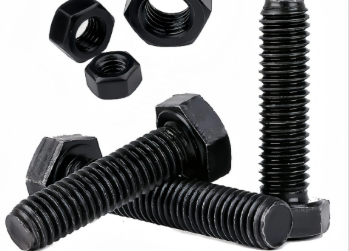
Bolts are mechanical fasteners used to join two or more components together in a detachable connection. They can be disassembled for inspection, maintenance or replacement without damaging the connected parts.
Main Purposes
1. Clamping & Fixing
The most common function. Tighten bolts to generate axial preload, pressing workpieces tightly together. Widely used for flanges, equipment bases, machine frames and structural steel parts.
2. Resist Tensile Load
Bolts bear pulling force along the bolt axis, preventing separation of connected parts under working pressure. Typical applications: pressure vessel flanges, pipeline connections.
3. Resist Shear Load
Reamed bolts transfer transverse load by the shank itself, preventing relative sliding between parts. Used for positioning and heavy-load joint structures.
4. Positioning & Alignment
High-precision bolts locate components and keep parts in correct relative position during assembly.
5. Anti-separation under vibration
Combined with washers, lock nuts or thread locking compound, bolts maintain clamping force under vibrating working conditions, suitable for pumps, compressors and mobile machinery.
Application Scenarios
• Petrochemical & offshore industry: Duplex / super duplex stainless steel bolts for pipeline flanges, seawater corrosion environment.
• Mechanical equipment: Hex socket cap screws, hex bolts for gearboxes, pumps and housings.
• Steel construction: High-strength bolts (8.8 /10.9 /12.9) for steel beams and supports.
• Pressure vessels: Double end studs for flange connections.
• General assembly: Countersunk screws, T-bolts for frames, sheet metal and fixtures.
Next
Next

CONTACT US
Mobile:+86-15622806883
TEL:0531-83238868
FAX:0531-83238868
WhatsApp:+86-15622806883
Email:info@cdfittings.com
Address:No.1, Panlongshan Industrial Park, Puji Street, Zhangqiu District, Jinan City, Shandong Province
ONLINE MESSAGE
Copyright © 2022 Shandong Chengde Metal Fittings Co.,Ltd 鲁ICP备2022025688号